
Leaking Chimney Flashing Repair Charlotte
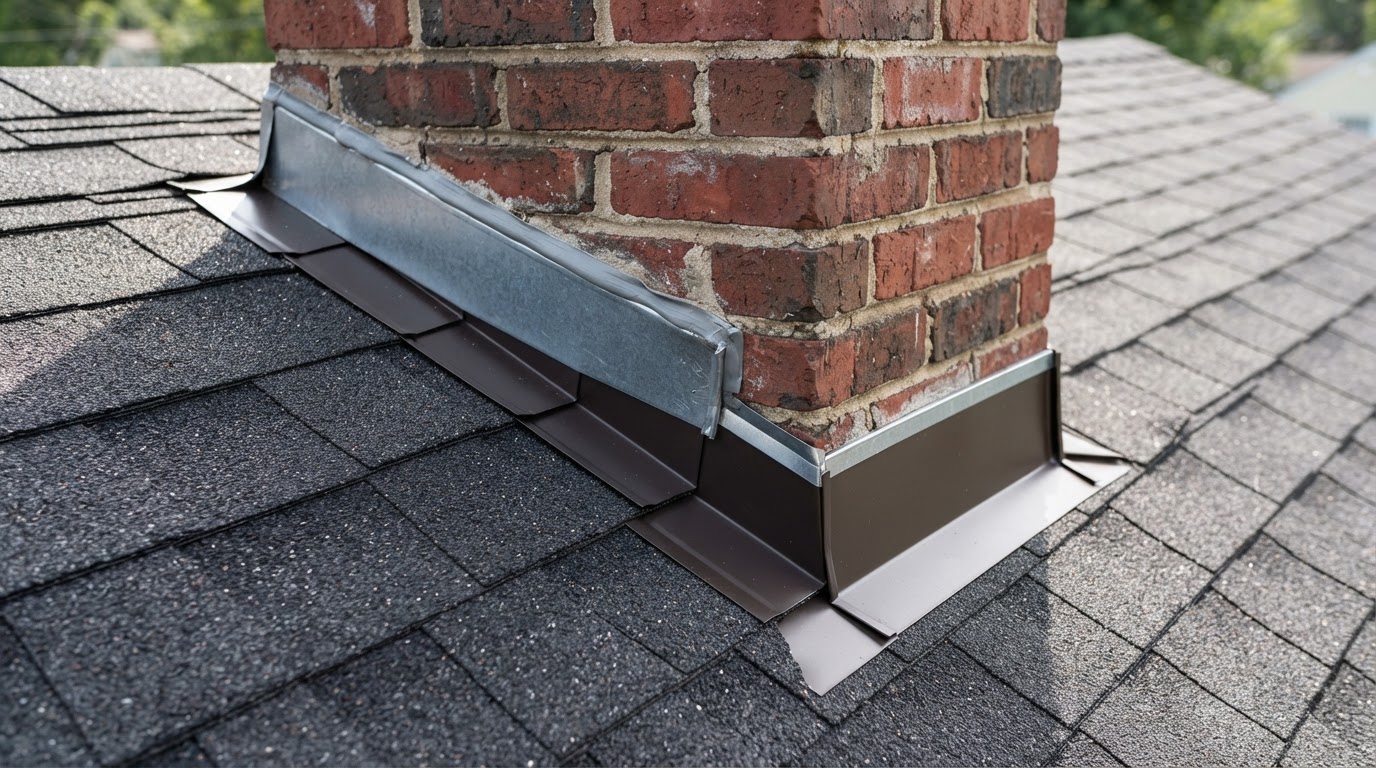
Water leaking around a chimney is one of the most common roof leak calls in Charlotte, and the chimney flashing is the first thing to suspect—but it is not the only possible source. The flashing is the metal assembly that waterproofs the transition where the chimney passes through the roof, and when the counter flashing separates from the masonry or the sealant at the metal-to-brick joint dries and cracks, water runs behind the step flashing and into the roof. C&B Home Solutions provides leaking chimney flashing repair throughout Charlotte and Mecklenburg County by tracing the water to the actual entry point, because not every chimney leak comes from the flashing and a chimney leak is not always a roof problem.
Step Flashing • Counter Flashing • Sealant • Masonry • Water Entry • Roof Transitions
Where Chimney Flashing Fails Near Charlotte
A chimney flashing assembly has several pieces, and each fails in its own way. The repair is scoped to the piece that actually let water in.
Counter Flashing Separation
Counter flashing is set into a cut in the masonry and folded down over the step flashing to cap the joint. When it separates from the mortar—from failed sealant, mortar movement, or age—water runs behind the step flashing and into the roof. This is the most common chimney flashing failure.
Step Flashing Gaps
Step flashing is woven into each shingle course up the sides of the chimney. A missing or short course leaves a gap where water enters at the shingle-to-chimney transition.
Apron Flashing
The apron at the low side of the chimney where the roof meets it carries the heaviest runoff from the chimney face. A failed apron lets water in at the base of the chimney.
Sealant & Decking
Failed sealant at the metal-to-masonry joints is the most common flashing-adjacent failure, and decking near a long-term chimney leak is checked for the rot that follows.
Signs a Chimney Is Leaking in Charlotte, NC
Chimney leaks show up at or around the chimney—on the ceiling or wall next to it, at the chimney breast inside the home, or running down the masonry after a storm. The signs point to the chimney, and the location on the chimney points to the failed piece.
Look for a water stain on the ceiling or wall next to a chimney, dampness at the chimney breast inside the home, water running down the masonry after a storm, and visible separation where the metal meets the brick. Counter flashing that has pulled out of the mortar, sealant that has cracked and shrunk, and step flashing visible because shingles have lifted away from the chimney are all flashing failures. The location of the interior stain relative to the chimney often indicates which side or piece failed.
Does Every Chimney Leak Come From Flashing?
No. The chimney cap, the crown, the masonry itself, or the flue can all let water in, and a flashing repair will not fix those. The assessment distinguishes a flashing failure from other chimney sources so the work addresses the actual entry point. We do not repair masonry, caps, or crowns—those are separate chimney work.
Risks of Delaying
Water behind chimney flashing soaks the decking around the chimney and the wall sheathing at the transition. A flashing leak left running rots the deck until a flashing repair is no longer enough and the decking must be replaced too.
How C&B Traces & Repairs a Chimney Flashing Leak Near Charlotte
A chimney leak is traced to the actual entry point—flashing, cap, crown, or masonry—so the repair addresses the real source rather than assuming the flashing.
We read the step, counter, and apron flashing, the sealant at the reglet, the shingles and underlayment around the chimney, and the decking beneath. When the leak traces to the flashing, the repair addresses the specific piece. When it traces elsewhere, we say so rather than selling a flashing repair that will not stop the leak.
Trace the Leak
Determine whether the water enters at the flashing, the cap, the crown, the masonry, or elsewhere.
Inspect the Flashing
Read the step, counter, and apron flashing and the sealant at the metal-to-masonry joints.
Check Surrounding Roof
Verify the shingles, underlayment, and decking around the chimney are serviceable.
Define the Repair
Scope localized flashing repair or full chimney flashing replacement based on the condition.
Complete the Work
Repair or replace flashing, reset counter flashing into the masonry, and reseal the joints.
Final Review
Review the completed flashing work and the surrounding roof and chimney condition with the owner.
When a Flashing Repair Is Enough vs When to Evaluate Replacement
An isolated chimney flashing failure on a sound roof is a repair. The question is whether the flashing has failed broadly or the roof itself is at end of life.
Chimney flashing repair is the right call when the failure is at the chimney transition, the surrounding shingles are flexible, and the decking is sound. It makes less sense when the flashing is failing across other transitions too, when the shingles are brittle, or when the roof has reached the end of its serviceable life—those point toward a replacement evaluation with new chimney flashing as part of the work.
We do not push every chimney leak toward replacement. A separated counter flashing on an otherwise serviceable roof is a repair, not a reroof.
Chimney Flashing & Charlotte-Area Conditions
Charlotte's climate is hard on the sealant and metal that waterproof a chimney. The conditions that age the flashing are the conditions that cause the leak.
Long, hot summers with high UV dry out the sealant at the metal-to-masonry joint faster than cooler climates, and afternoon thunderstorms drive wind-driven rain against the chimney face that pushes water behind any lifted counter flashing. Charlotte's mix of older homes with masonry chimneys and newer construction means chimney flashing failures show up across a wide range of housing stock.
Clear Communication
Condition-Based Scope
System Awareness
Local Service
Leaking Chimney Flashing Repair FAQs
Related Roofing Solutions
Explore connected roofing specialties and component repairs serving Charlotte homeowners.
Chimney Flashing Repair
Core chimney flashing service page.
Step Flashing Repair
Step flashing at chimney and wall transitions.
Roof Flashing Repair & Replacement
All flashing transitions and penetrations.
Roof Leak Repair
Tracing leaks to chimney and flashing failures.
Roof Deck Rot Repair
Decking damage beneath a chimney leak.
Need Leaking Chimney Flashing Repair Near Charlotte?
C&B Home Solutions provides leaking chimney flashing repair throughout Charlotte, Mecklenburg County, and surrounding North Carolina communities. Request an estimate and we will trace the chimney leak to the actual entry point and outline the appropriate repair scope.