
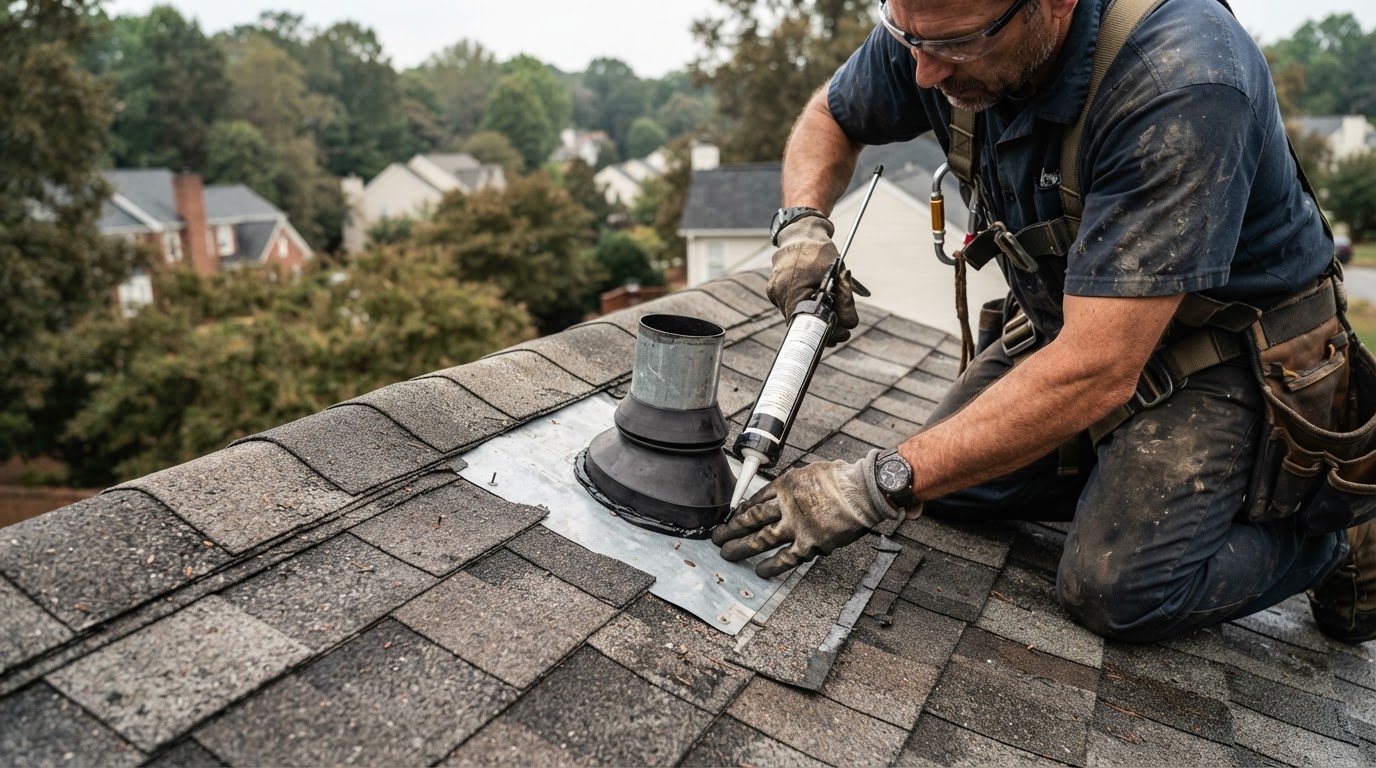
Roof-to-Wall Flashing Repair Charlotte
Roof-to-wall flashing is the metal detail that waterproofs the transition where a roof surface meets a vertical wall—a dormer side, an exterior wall, a chimney, or any siding interface. It is built from step flashing woven into the shingles up the slope and counter flashing set into the wall to cap the top of the step flashing, and when either piece separates, corrodes, or loses its seal, water enters where the roof meets the wall. C&B Home Solutions provides roof-to-wall flashing repair throughout Charlotte and Mecklenburg County for separated step flashing, failed counter flashing, and the wall leaks that follow. We trace the water to the specific transition that failed, because caulk alone is not a flashing repair and a wall stain does not prove the wall is the source.
Step Flashing • Counter Flashing • Siding Interfaces • Wall Transitions • Water Entry
What Roof-to-Wall Flashing Repair Involves Near Charlotte
A flashing repair addresses the metal and the installation, not just the caulk. Sealant alone is a temporary patch on a flashing failure, not a repair.
Step Flashing
Missing, short, or strip-installed step flashing is replaced with properly stepped L-shaped pieces woven into each shingle course. The shingles above are reworked so the new flashing laps correctly under the course.
Counter Flashing
Separated or corroded counter flashing is reset into the wall reglet or replaced and resealed where the metal meets the siding. A counter flashing that has pulled out of the wall is the most common roof-to-wall leak source.
Sealant at the Reglet
The sealant where counter flashing meets the wall is dried, cracked, and shrunk on aging Charlotte roofs. The repair removes failed sealant and reseals the reglet joint—but sealant is part of the flashing detail, not a substitute for it.
Siding & Decking
Water that has run behind roof-to-wall flashing can damage the siding, the wall sheathing, and the roof decking at the transition. The repair checks the decking and the wall interface for the rot that a long-term wall leak causes.
Signs of Roof-to-Wall Flashing Failure in Charlotte, NC
Roof-to-wall flashing leaks show up where a roof meets a wall—a dormer side, a chimney, an addition, or any exterior wall. The signs point to the transition, and the weather pattern points to wind-driven rain.
Look for a water stain on the interior wall where a roof slope meets an exterior wall, dampness or discoloration at the base of a dormer or chimney inside the home, water running down the siding after a storm, and visible separation where the flashing meets the wall. Counter flashing that has pulled out of the wall reglet, missing step flashing visible where shingles meet the wall, and cracked or shrunk sealant at the metal-to-wall joint are all flashing failures.
Is Caulk Enough to Repair Flashing?
No. Sealant is part of the flashing detail, but caulk alone over a separated or missing flashing is a temporary patch, not a repair. Water runs behind the metal, and caulk on the surface does not stop that path. A roof-to-wall flashing repair addresses the metal and the installation.
Risks of Delaying
Water behind roof-to-wall flashing soaks the wall sheathing, the roof decking at the transition, and the siding. What starts as a flashing repair grows into decking and wall work the longer the leak runs.
How C&B Repairs Roof-to-Wall Flashing Near Charlotte
A roof-to-wall flashing repair is traced to the specific transition and the specific piece that failed, because the wall stain is the arrival point, not the entry point.
We read the step flashing, the counter flashing, the reglet sealant, and the wall and decking interface to find where the water actually broke through. The repair addresses that metal and installation, not just the caulk on top.
Inspect the Transition
Read the step flashing, counter flashing, reglet sealant, and wall and decking interface at the roof-to-wall joint.
Trace the Water
Find the specific point where water broke through the flashing, not just the wall stain below.
Identify the Piece
Determine whether the failure is step flashing, counter flashing, sealant, or the wall interface.
Define the Repair
Replace or reset the failed metal and reseal the reglet—not just caulk over the failure.
Check Decking & Siding
Verify the roof decking and wall sheathing at the transition are sound before sealing.
Final Review
Review the repaired transition and the surrounding roof and wall condition with the owner.
When Flashing Repair Is Enough vs When to Evaluate Replacement
A single wall-transition flashing failure on a sound roof is a repair. The question is whether the flashing has failed broadly across multiple transitions or the roof itself is at end of life.
Roof-to-wall flashing repair is the right call when the failure is at one transition, the shingles are flexible, and the decking and wall sheathing are sound. It makes less sense when multiple wall transitions leak, when the flashing is failing across the roof, or when the roof shingles are brittle—those point toward a broader flashing or replacement evaluation.
We do not push every wall-transition leak toward replacement. A separated counter flashing on an otherwise serviceable roof is a repair, not a reroof.
Roof-to-Wall Flashing & Charlotte-Area Conditions
Charlotte's heat and thunderstorms age the sealant and test the metal at wall transitions. The conditions that dry the reglet sealant are the conditions that open the wall-to-flashing joint.
Long, hot summers crack and shrink the sealant at the counter-flashing reglet faster than cooler climates, and wind-driven rain from afternoon thunderstorms pushes water behind any counter flashing that has lifted. Dormers and additions—common on Charlotte's mix of older and newer homes—add roof-to-wall transitions that each need their own flashing integrity.
Clear Communication
Condition-Based Scope
System Awareness
Local Service
Roof-to-Wall Flashing Repair FAQs
Related Roofing Solutions
Explore connected roofing specialties and component repairs serving Charlotte homeowners.
Roof Flashing Repair & Replacement
Step, counter, and wall transition flashing.
Step Flashing Repair
Woven step flashing at wall and chimney transitions.
Roof Leak Repair
Tracing leaks to wall-transition failures.
Roof Repair
Targeted repair at wall transitions.
Chimney Flashing Repair
Chimney-specific flashing transitions.
Need Roof-to-Wall Flashing Repair Near Charlotte?
C&B Home Solutions provides roof-to-wall flashing repair throughout Charlotte, Mecklenburg County, and surrounding North Carolina communities. Request an estimate and we will inspect the step and counter flashing at the wall transition and outline the appropriate repair scope.