
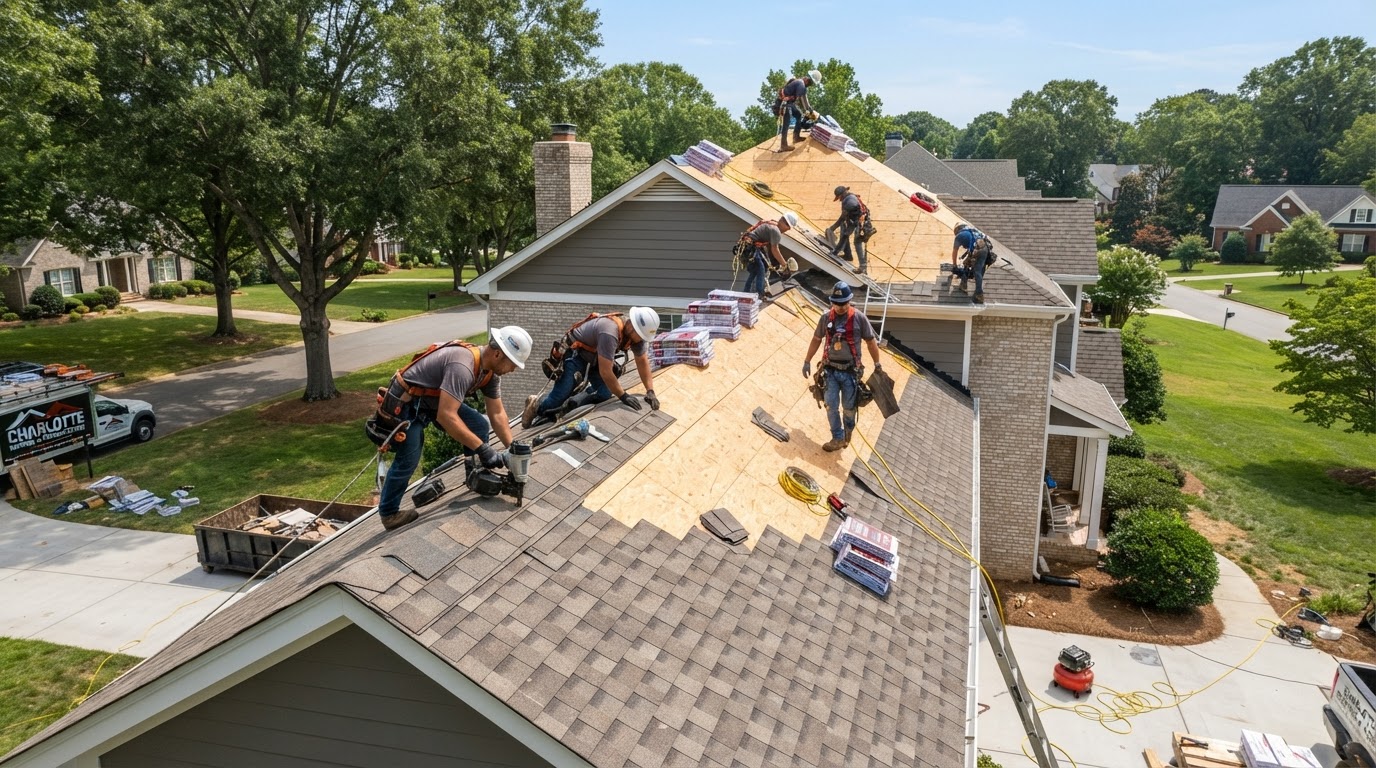
Roof Leak After Wind Storm Repair Charlotte
A roof that starts leaking after a wind storm is one of the most common storm calls in Charlotte, and it points to wind damage that may not be obvious from the ground. Wind lifts, creases, and removes shingles, displaces flashing, and drives rain into gaps that were not there before the storm. C&B Home Solutions provides roof leak after wind storm repair throughout Charlotte and Mecklenburg County by tracing the new leak to the wind damage that caused it, because a leak that appears right after a storm is almost always storm-related.
Lifted Shingles • Missing Shingles • Creased Tabs • Displaced Flashing • Wind-Driven Rain
How Wind Damages a Roof Near Charlotte
Wind damages roofing in several ways, and each creates its own leak path. The repair is scoped to the damage the storm actually caused.
Lifted & Creased Shingles
Wind lifts shingle tabs and creases them back, breaking the seal strip. A creased shingle remains attached but is failed, and the crease is where water enters.
Missing Shingles
Wind tears shingles off entirely, exposing the underlayment and decking. Missing shingles are the most visible wind damage but not the only kind.
Displaced Flashing
Wind lifts or peels flashing at transitions and penetrations. Even a small displacement can admit wind-driven rain that the flashing shed before the storm.
Ridge & Vent Damage
Ridge caps and roof vents sit at the most exposed point on the roof and take the full wind load. Damaged ridge caps and vents are common wind-storm leak sources.
Signs of Wind Damage on a Roof in Charlotte, NC
Wind damage shows up both on the roof surface and as a new leak inside. The timing—a leak that starts right after a storm—is the strongest clue.
Look for shingles that are lifted, creased, or missing when viewed from the ground, a new ceiling stain or drip that appeared during or right after a wind storm, flashing or ridge caps that look shifted, and debris on the roof from broken branches. Keep in mind that wind damage can be subtle—a creased shingle still sits roughly in place, and displaced flashing may not be visible from the ground.
Do Not Climb the Roof
Storm-damaged roofs are unsafe to walk. Lifted shingles can slide, displaced flashing can be sharp, and wet or wind-loosened roofing is a fall hazard. Observe from the ground, document any interior damage, and contact a roofing professional for the on-roof evaluation.
Risks of Delaying
Wind damage does not heal. A creased shingle or displaced flashing will leak with every subsequent rain until it is repaired, and the decking beneath the damage soaks a little more each storm. The longer it goes, the larger the decking repair grows.
How C&B Traces & Repairs a Wind-Storm Leak Near Charlotte
A post-storm leak is traced to the wind damage that caused it, using the timing, the roof geometry, and the visible damage.
We read the shingles for lifting, creasing, and missing tabs, the flashing for displacement, the ridge and vents for damage, and the decking beneath any new stain. Because the leak appeared after a storm, the assessment focuses on storm damage rather than age-related failure, and the repair is scoped to the damage the wind actually caused.
Confirm the Timing
Establish that the leak appeared during or right after a wind storm on a roof that did not leak before.
Inspect for Wind Damage
Read the shingles for lifting, creasing, and missing tabs, and the flashing and ridge for displacement.
Trace the Leak
Connect the new interior stain to the wind damage above it, accounting for water that travels.
Define the Scope
Determine whether the damage is localized or widespread and whether the surrounding roofing is serviceable.
Complete the Repair
Replace missing or creased shingles, reset displaced flashing, and repair any damaged decking.
Final Review
Review the repair and the surrounding roof condition with the owner.
When Wind Damage Repair Is Enough vs When to Evaluate Replacement
Localized wind damage on a sound roof is a repair. The question is whether the storm damage is widespread or the roof was already at end of life.
A targeted repair is the right call when the wind damage is limited to a defined area—a few missing or creased shingles, a displaced flashing section—and the surrounding roofing is serviceable. It makes less sense when the storm stripped shingles across a wide area, the roof was already near end of life, or the decking is rotted beneath the damage—those point toward a roof replacement evaluation.
We do not push every wind-storm leak toward replacement. A few damaged shingles on an otherwise serviceable roof is a repair, not a reroof.
Wind Storms & Charlotte-Area Conditions
Charlotte's storm climate produces the strong winds that lift, crease, and remove shingles and displace flashing.
Afternoon thunderstorms and the occasional coastal remnant bring strong wind gusts that test shingle seal strips and flashing transitions, and Charlotte's tree-covered properties add falling limbs and debris that compound wind damage. The combination of wind and wind-driven rain is why post-storm leaks are such a frequent call here, and why a roof that did not leak before a storm almost always has storm damage to blame.
Clear Communication
Condition-Based Scope
System Awareness
Local Service
Roof Leak After Wind Storm Repair FAQs
Related Roofing Solutions
Explore connected roofing specialties and component repairs serving Charlotte homeowners.
Need Roof Leak Repair After a Wind Storm Near Charlotte?
C&B Home Solutions provides roof leak after wind storm repair throughout Charlotte, Mecklenburg County, and surrounding North Carolina communities. Request an estimate and we will trace the new leak to the wind damage that caused it.