
TPO Roofing Charlotte
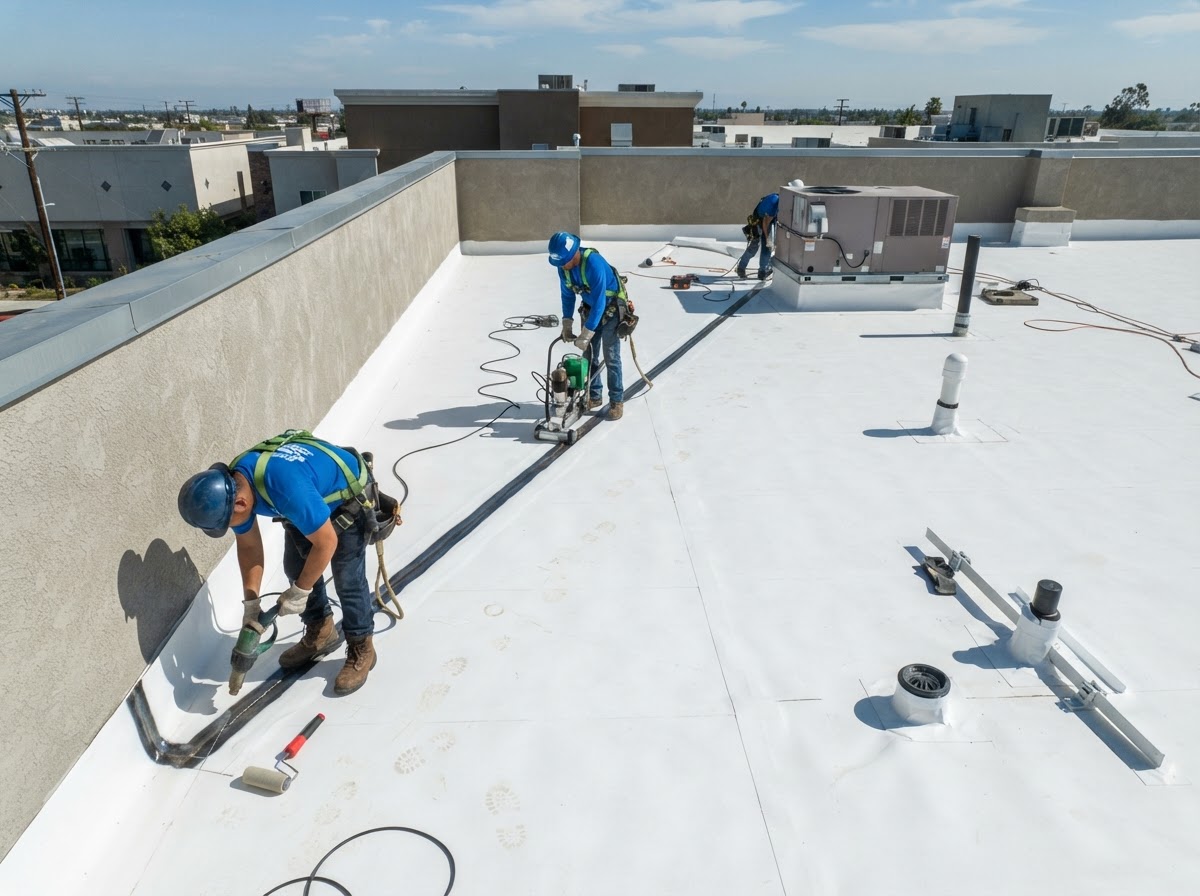
TPO roofing from C&B Home Solutions covers installation, replacement, and repair of TPO membrane systems throughout Charlotte and Mecklenburg County. TPO—thermoplastic polyolefin—is a single-ply membrane used on low-slope commercial roofs, with heat-welded seams and reflective white surfaces for solar reflectivity. Like every flat roof, a TPO roof is a system: membrane, seams, flashing, penetrations, insulation, and drainage all working together.
Heat-Welded Seams • Flashing • Penetrations • Drainage • Insulation • Membrane Maintenance
What a TPO Roof System Involves Near Charlotte
A TPO roof is a layered system. The membrane, substrate, insulation, flashing, penetrations, drainage, and seams all determine whether the roof performs or leaks.
Membrane & Heat-Welded Seams
TPO sheets heat-welded at the seams. Proper seam welding is critical—a poorly welded seam is a primary point of failure. Seam condition is always evaluated during repair or replacement.
Flashing & Penetrations
Parapet wall flashing, curb flashing for HVAC and equipment, edge metal, and penetration detailing for every pipe, vent, and conduit. Most TPO leaks originate at flashing or penetration points where the membrane transitions or terminates.
Drainage & Insulation
Drainage paths and insulation beneath the membrane. Ponding water degrades TPO over time, and insulation condition affects the roof's thermal performance. Drainage and insulation are part of the evaluation.
Membrane Condition
The membrane itself—checking for cracks, splits, pulled seams, UV degradation, and wear at high-traffic areas. Membrane condition determines whether repair or replacement is the right scope.
Signs a TPO Roof Needs Attention in Charlotte
TPO problems develop at seams, flashing, penetrations, and drainage. Because the roof is low-slope, water moves across the surface and problems show up as interior ceiling stains, wet insulation, or visible membrane issues.
Signs include interior ceiling stains or wet insulation, pulled or failing seams, failed flashing at walls or penetrations, ponding water that does not drain, membrane cracks or splits, and wear at high-traffic or equipment areas. Charlotte's heat and UV degrade TPO over time, and thunderstorm debris can clog drains and create ponding water that accelerates membrane breakdown.
Seam & Flashing Leaks
Most TPO leaks originate at failed seams or failed flashing. Heat-welded seams can fail with age or poor installation, and flashing at penetrations and walls breaks down with UV and thermal movement. These are usually repairable at the specific point.
Drainage & Membrane Breakdown
Ponding water and UV degradation break down the membrane over time. Clogged drains are a common Charlotte-area problem—debris from storms clogs drains and creates ponding water. Drainage correction and membrane repair are often combined.
Our TPO Roofing Process in Mecklenburg County
Whether a seam repair or a full TPO replacement, the work follows a structured sequence so the system is evaluated and repaired or installed correctly.
We do not claim installation certifications or warranties that have not been supplied. The process reflects how C&B Home Solutions scopes TPO work across Charlotte.
TPO Roof Assessment
Inspect the membrane, seams, flashing, penetrations, and drainage.
Identify Problem Areas
Trace leaks to seam, flashing, or penetration entry points.
Define Repair or Replacement Scope
Recommend targeted seam or flashing repair, drainage correction, or full TPO replacement.
Property & Roof Preparation
Prepare the roof and building for the work.
Complete TPO Roofing Work
Repair or install membrane, seams, flashing, and drainage.
Final Review
Walkthrough of the completed TPO roofing work.
TPO Roofing & Charlotte-Area Conditions
Charlotte's climate shapes TPO performance in specific ways. Heat, UV, and thunderstorm-driven debris all stress the membrane and seams.
Heat, UV & Reflectivity
TPO's reflective white surface helps manage roof surface temperature under Charlotte's sun, which can reduce thermal stress on the building. But UV still degrades the membrane over time, and the surface requires evaluation as the roof ages.
Storms & Drainage
Thunderstorms bring heavy rain and debris that can clog drains and create ponding water. Clogged drains are one of the most common TPO roof problems in the Charlotte area. Drainage is always part of the evaluation and often part of the repair scope.
Why Charlotte Commercial Property Owners Choose C&B for TPO
C&B Home Solutions treats a TPO roof as a complete system—membrane, seams, flashing, penetrations, insulation, and drainage working together. We scope TPO work around the actual roof condition rather than applying a one-size approach.
Clear communication, condition-based recommendations, and property-conscious work practices define how we approach commercial TPO roofing. We serve commercial roofing customers across Charlotte and surrounding communities and keep the scope discussion direct.
Clear Communication
Condition-Based Scope
System Awareness
Local Service
TPO Roofing FAQs
Related Roofing Solutions
Explore connected roofing specialties and component repairs serving Charlotte homeowners.
Commercial Roofing
Full commercial roofing services and systems.
Flat Roofing
Low-slope membrane roofing systems.
EPDM Roofing
EPDM rubber membrane roofing services.
Modified Bitumen Roofing
Modified bitumen flat roofing systems.
Commercial Flat Roof Repair
Targeted TPO membrane and seam repairs.
Commercial Roof Replacement
Complete commercial roof replacement.
Roof Maintenance
Preventive maintenance for TPO systems.
Roof Inspection
TPO roof inspections and condition assessments.
Need TPO Roofing Service Near Charlotte?
C&B Home Solutions provides TPO roofing services throughout Charlotte, Mecklenburg County, and surrounding North Carolina communities. Request an estimate and we will inspect the membrane, seams, flashing, drainage, and penetrations and outline the appropriate scope of work.