
Emergency Roof Tarp Removal & Permanent Repair Charlotte
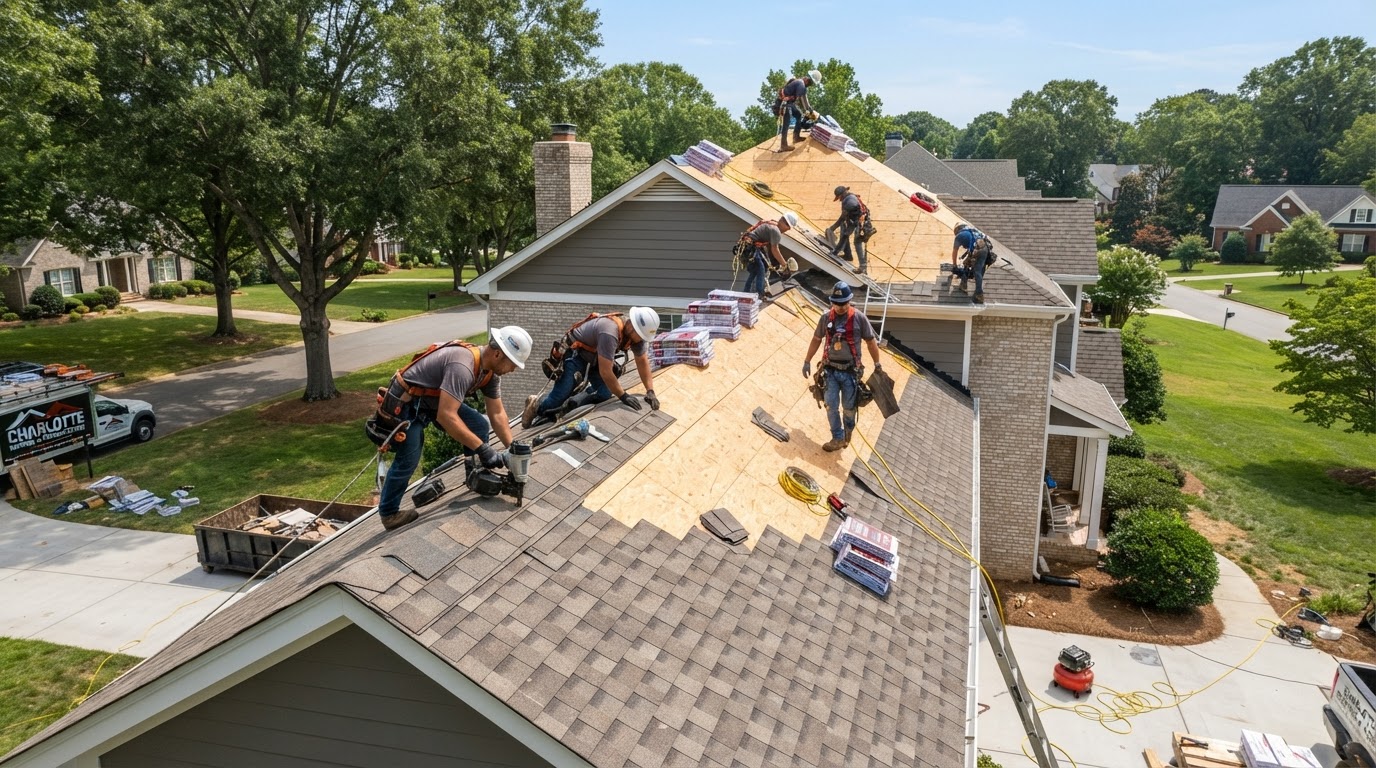
If your roof was tarped after a storm, the tarp did its job—it stopped the immediate water entry. But a tarp is temporary protection, not a roofing repair, and the damaged shingles, decking, and flashing beneath it still need permanent work. C&B Home Solutions provides emergency roof tarp removal and permanent repair throughout Charlotte and Mecklenburg County by evaluating the damage under the tarp, completing the permanent roofing work, and removing the tarp only when the roof beneath is watertight.
Tarp Removal • Damage Evaluation • Shingle & Decking Repair • Permanent Roofing Work
What Tarp Removal & Permanent Repair Involves Near Charlotte
Permanent repair means removing the tarp, evaluating the damage beneath, and completing the roofing work the tarp was covering.
Evaluate the Damage
Once the tarp is removed, the full extent of the storm damage is visible—shingles, decking, flashing, and any secondary damage from water that sat under the tarp. The repair scope is built from what the tarp was hiding, not just what was visible when it went on.
Shingle & Decking Repair
Missing or broken shingles are replaced and any punctured or rotted decking is cut out and replaced with solid sheathing before the new shingles go on.
Flashing & Penetrations
Flashing displaced by the storm is reset or replaced, and any damaged penetrations are repaired so the roof transitions are watertight again.
Replacement Evaluation
When the damage beneath the tarp is widespread or the roof was already near end of life, the permanent repair may be a full roof replacement rather than a patch. The evaluation makes that call honestly.
When to Move From Tarp to Permanent Repair in Charlotte, NC
A tarp is a holding measure, and the permanent repair should follow as soon as conditions allow. The signs that the tarp has run its course are the signs that it is about to fail.
Look for a tarp that has shifted, torn, or billowed in the wind; pooling water on the tarp surface; edges that have pulled loose from the ridge or eaves; and any new interior dampness that suggests the tarp is no longer sealing. Even a tarp that looks intact is on borrowed time—UV and heat break down the material, and the next storm may be the one that gets under it.
Do Not Remove the Tarp Yourself
Removing a tarp exposes the damaged roof beneath to the weather, and the roof under a tarp is often structurally compromised—punctured decking, broken shingles, displaced flashing. The tarp stays in place until the permanent repair is ready to begin, and the removal is part of the repair process, not a separate step.
Risks of Delaying
A tarp left in place eventually fails, and the damage beneath it continues to deteriorate—decking rots, shingles that could have been repaired become unsalvageable, and the repair scope grows. The permanent repair should follow the tarp as soon as conditions and scheduling allow.
How C&B Moves From Tarp to Permanent Repair Near Charlotte
The permanent repair evaluates the damage under the tarp, completes the roofing work, and removes the tarp only when the roof beneath is watertight.
We remove the tarp as the first step of the permanent repair—not before—evaluate the full extent of the storm damage beneath it, and scope the repair to the shingles, decking, and flashing that need work. When the damage is localized, the permanent repair is a targeted fix; when it is widespread or the roof was near end of life, the evaluation recommends replacement honestly. The tarp comes off only when the roof beneath is ready to be watertight.
Remove the Tarp
Take the tarp off as the first step of the permanent repair, exposing the full storm damage beneath.
Evaluate the Damage
Assess the shingles, decking, flashing, and penetrations the tarp was covering, including any secondary water damage.
Define the Scope
Determine whether the permanent repair is a targeted fix or a roof replacement based on the damage extent and roof condition.
Repair Decking
Replace any punctured or rotted sheathing before the new roofing goes on.
Complete the Roofing
Replace shingles, reset flashing, and restore the roof to watertight.
Final Review
Review the permanent repair and the surrounding roof condition with the owner.
When Permanent Repair Is Enough vs When to Evaluate Replacement
The damage under a tarp determines the scope. Localized storm damage is a permanent repair; widespread damage or an end-of-life roof points to replacement.
A permanent repair is the right call when the storm damage is limited to a defined area—a section of missing shingles, a punctured deck panel, a displaced flashing section—and the surrounding roofing is serviceable. It makes less sense when the storm stripped shingles across a wide area, the decking is rotted across the slope, or the roof was already near end of life—those point toward a roof replacement that resolves the damage and the underlying condition together.
We do not push every tarped roof toward replacement. Localized storm damage on an otherwise serviceable roof is a permanent repair, not a reroof.
Tarping & Permanent Repair in Charlotte-Area Conditions
Charlotte's storm season produces the damage that leads to tarping, and Charlotte's heat and UV set the clock on how long a tarp lasts.
Afternoon thunderstorms, occasional hail, and tree-limb impacts from mature canopy are the events that open roofs and lead to emergency tarping across Charlotte and Mecklenburg County. Once a tarp is on, the long, hot summers break down the tarp material faster than homeowners expect—UV and heat embrittle the fabric and weaken the tie-downs—which is why the permanent repair should follow a tarp promptly rather than waiting for the tarp to fail.
Clear Communication
Condition-Based Scope
System Awareness
Local Service
Emergency Roof Tarp Removal & Permanent Repair FAQs
Related Roofing Solutions
Explore connected roofing specialties and component repairs serving Charlotte homeowners.
Need Permanent Roof Repair After Emergency Tarping Near Charlotte?
C&B Home Solutions provides emergency roof tarp removal and permanent repair throughout Charlotte, Mecklenburg County, and surrounding North Carolina communities. Request an estimate and we will evaluate the damage under the tarp and outline the permanent repair scope.